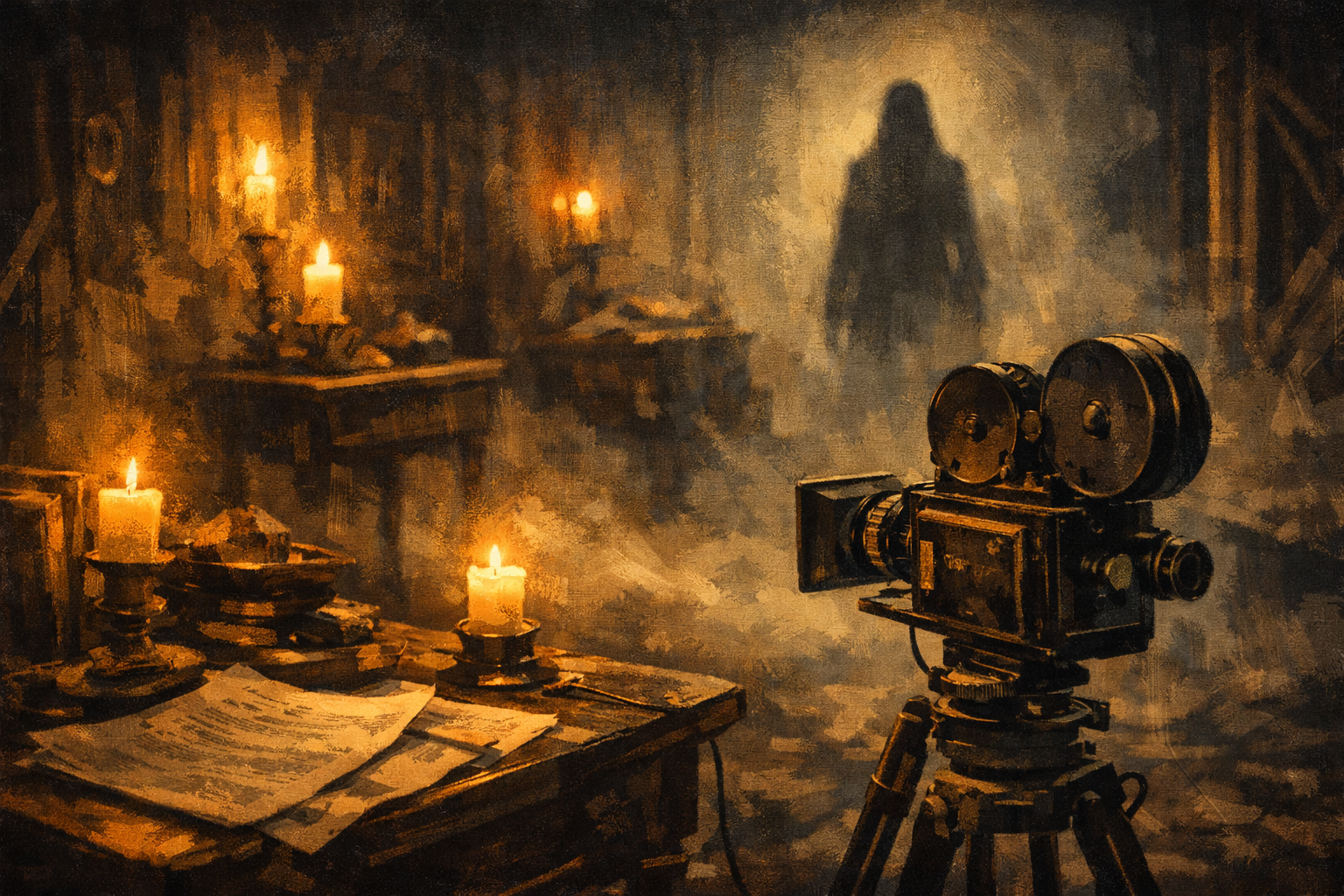
Most horror films give you a monster and ask you to be scared of it.
Shadow of the Vampire gives you a monster and asks you to be scared of the person who hired it.
The 2000 film, starring Willem Dafoe and John Malkovich, is built around a premise that sounds like a late-night comedy sketch: the making of the 1922 silent film Nosferatu, except the actor playing the vampire is, inconveniently, an actual vampire. There are no jump scares. No gore to speak of. What it has instead is a slow, creeping moral discomfort that only gets worse the longer you watch.

The Monster Isn’t the Problem
Director F.W. Murnau (Malkovich) has agreed to offer his lead actress to his vampire, Schreck (Dafoe), as payment for completing the film. He doesn’t tell his cast and crew this. He just tells them to stay away from Schreck and not ask questions.
Schreck, for his part, is almost comically unbothered. When Murnau chides him for eating crew members, Schreck responds: “Oh, the script girl. I’ll eat her later.” It’s funny. It’s also terrifying. But the camera keeps returning to Murnau, calm and calculating, rationalizing each casualty in the name of authenticity.
That’s when the film’s real question comes into focus.
The Inversion
Early horror relied on external monsters that violated nature from outside. After Psycho, the genre turned inward, locating evil within human psychology.

Shadow of the Vampire gives you both, then quietly swaps which one you’re supposed to fear. Schreck is hunger without conscience. Murnau is conscience without limit. One of them is a vampire. The other is the more dangerous creature.
By the final scene, Murnau has orchestrated the death of his lead actress on camera to capture the moment the vampire takes her life. The horror has fully shifted from supernatural threat to ethical collapse.
What Horror Requires
Across this genre series, horror promises dread more than any other. The most durable version isn’t the thing that jumps out at you. It’s the thing that was wrong the whole time and you only recognize it too late.
Shadow of the Vampire delivers exactly that. The monster was never the problem. The problem was the man with the camera.
When horror works best for you, is it the moment of shock or the slow realization that something has been wrong all along?
Leave a Reply