← Back to brycemcanally.com
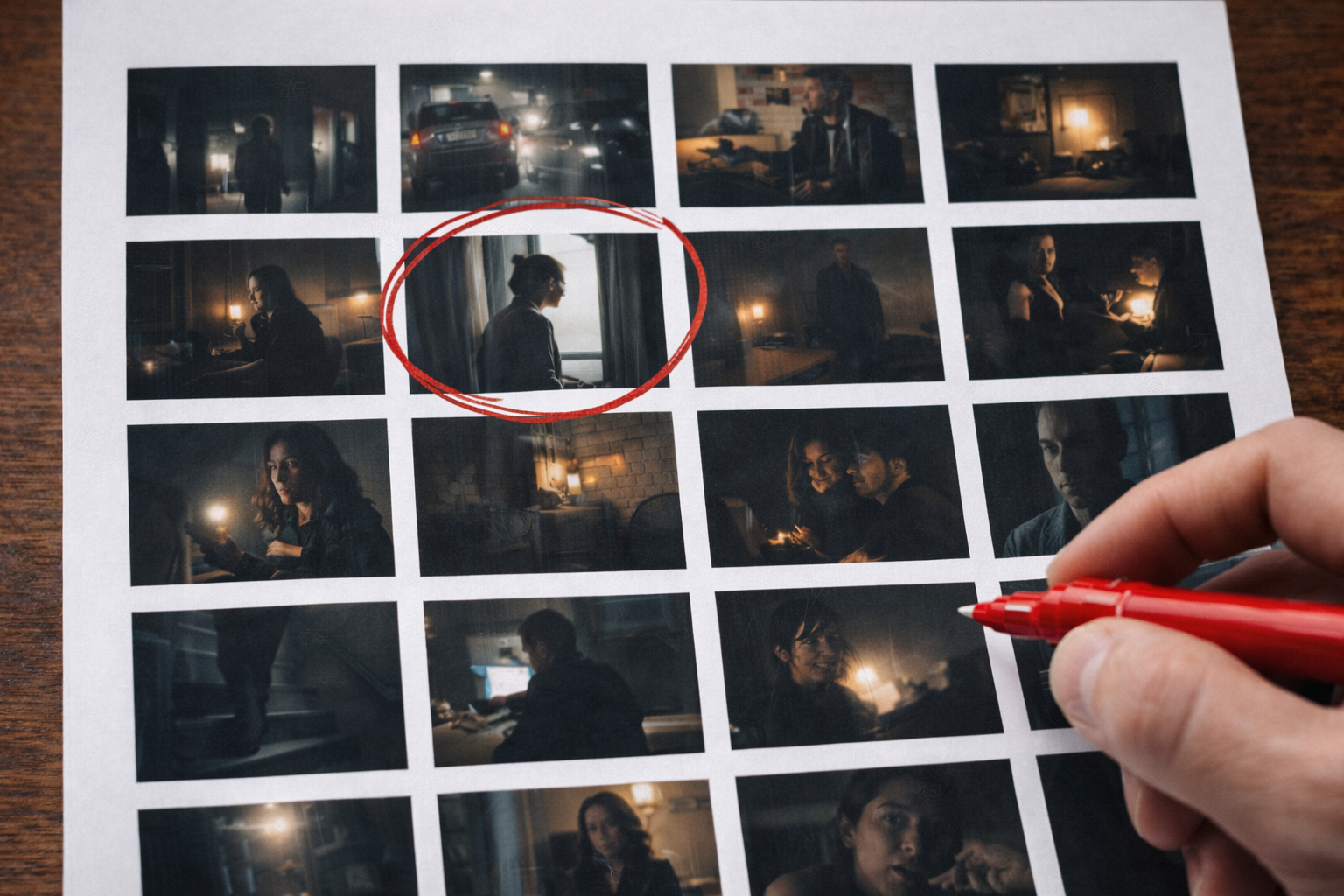
Contact sheet of cinematic film stills with one image circled in red, symbolizing creative discernment and the discipline of taste.

Creative Practice #3: Developing Taste

The hardest part of creative work isn’t coming up with ideas.

It’s deciding which ones deserve to stay.

When we talk about creativity, we often focus on output, making more, shipping faster, generating ideas. But at a certain point, producing isn’t the hardest part.

Choosing is.

In The Creative Act: A Way of Being, Rick Rubin – the prolific music producer known for shaping artists across genres – describes the artist not as someone who forces ideas into existence, but as someone who develops the sensitivity to recognize what feels aligned. Taste isn’t preference. It’s discernment.

It’s the ability to sense when something strengthens the whole… and when it distracts from it.

That’s a quieter skill. And a harder one.

I’ve started noticing this in my own work as I develop story ideas. Early drafts are full of energy and possibility. Moments I’m proud of. Scenes I feel attached to.

But pride isn’t the same thing as coherence.

Sometimes an idea I love doesn’t serve the story. Sometimes a scene that feels clever slows the pace. Sometimes a character moment I’m attached to muddies the theme.

And that’s where taste begins to matter.

The more I study genre and structure, the more I see that taste isn’t just about what feels good to me. It’s about whether a choice fulfills the promise being made to an audience.

Not in defending what I like but in asking better questions:

Does this deepen the experience?

Does this belong here?

Is this essential?

Taste isn’t about protecting what you love.


It’s about developing the judgment to choose what serves the story.

Taste develops through attention. Through comparison. Through editing. Through restraint.

Creativity isn’t just the courage to express.

It’s the discipline to refine.

And refinement is rarely dramatic. It’s quiet. Iterative. Often invisible.

But it’s where the work becomes stronger.

How are you training your taste – not just your output?


Comments

6 responses to “Creative Practice #3: Developing Taste”

  1. Having worked in the studio with different producers—from those who chase every spark to those who strip a track down to its bare essentials—I’ve learned that taste really shows up in the edit. I’ve seen sessions where a brilliant verse got cut because it didn’t serve the song, and in the moment it stings—but later you realize the record breathes better without it. Being around producers who ask, “Does this move the song forward or just show we’re clever?” has trained me to detach my ego from the outcome and listen for what the work actually needs.
    When you’re deep in a draft and emotionally attached, how do you create enough distance to tell whether you’re serving the story—or just protecting your favorite parts?

  2. I think you really captured how creativity is as much about editing as it is about generating ideas. I like the emphasis on taste as discernment; choosing what truly serves the story rather than what we’re personally attached to. It’s a great reminder that restraint and thoughtful evolution are what ultimately elevate creative work.

  3. Winston Vengapally Avatar
    Winston Vengapally

    I really like the distinction you made between pride and coherence. It’s easy to get attached to something just because you created it, even if it doesn’t actually serve the bigger picture. That idea of “taste” being discernment instead of preference makes a lot of sense, especially in creative fields where you can generate endlessly but still need to edit intentionally.

    Do you think developing taste comes more from experience over time, or from studying and analyzing other people’s work closely?

  4. Lydia K Ball Avatar
    Lydia K Ball

    And an important follow up to this; be willing to defend your taste! I worked with a guy who lauded the new ‘Frankenstein’. When he heard the boss hadn’t enjoyed it, he quickly switched to dissing the film. This might have earned him some points with the boss, but the rest of us stopped trusting and respecting his opinion pretty quickly after that.

  5. This is such a great read. As a producer, I’m constantly thinking about the choices that actually serve the story. Studying genre and structure and learning from the films I love has helped me develop my taste, but the hardest part is always deciding what stays and what has to go. That discipline—choosing what strengthens the whole—is exactly what makes the work better, just like you describe.

  6. […] in this series, I wrote about taste: the discipline of sensing whether a choice strengthens the whole or distracts from it. Cohesion is […]

Leave a Reply

Discover more from Bryce McAnally

Subscribe now to keep reading and get access to the full archive.

Continue reading